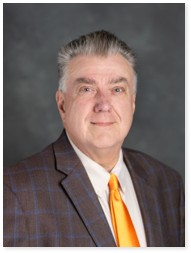
Dr. Howard Hall
Director, Institute for Nuclear Security
Professor of Nuclear Security
University of Tennessee, Knoxville
Biography
Dr. Howard Hall is the founding Director of the University of Tennessee Institute for Nuclear Security (INS) and serves as a Professor of Nuclear Security. He is internationally recognized for his leadership and innovation in the field of nuclear threat reduction.
Research Focus
Dr. Hall’s research encompasses a wide range of nuclear security applications, including:
-
Nuclear proliferation detection and counter-proliferation strategies
-
Radiological and nuclear threat detection and emergency response
-
Nuclear forensics and post-incident analysis
-
Radiochemistry and isotope analysis
-
Development of nuclear-based technologies for broader security missions, including explosives detection and interdiction
His interdisciplinary work bridges science, engineering, and policy to address real-world national and global security challenges.
Dr. Howard Hall is a nationally recognized leader in nuclear security and nonproliferation, with over three decades of experience spanning government service, national laboratories, academia, and scientific advising. As the founding director of the Institute for Nuclear Security (INS), Dr. Hall has played a central role in shaping nuclear security research and workforce development across the country.
His background includes more than 20 years at Lawrence Livermore National Laboratory, where he held leadership positions in radiological emergency response, nuclear forensics, and global threat reduction. Since joining the University of Tennessee, he has built INS into a hub for interdisciplinary collaboration and cutting-edge research aligned with U.S. national security priorities.
Dr. Deborah Penchoff
Senior Fellow, UTK Institute for Nuclear Security Assistant Professor, Department of Chemistry, University of Central Florida
Biography
Dr. Deborah Penchoff is an Assistant Professor of Chemistry at the University of Central Florida with a PhD in Physical Chemistry and Computational Sciences. She leads technical areas in DOE-NNSA consortiums for nuclear forensics and radiochemistry, serves as a Senior Fellow at UTK-INS, and is an elected officer in the American Chemical Society’s Nuclear Chemistry Division. Her work focuses on computational approaches to radiochemistry and nuclear science.
Research Focus
-
-
Dr. Penchoffs research spans a broad range of national security applications, including:
-
Rare earth elements and critical minerals
-
Radiochemical separations
-
Purification of radiotherapeutics
-
Applied high-performance computing and data science
-
Design, development, and application of artificial intelligence frameworks for:
-
Radiochemistry
-
Circular bio economy systems
-
Smart agriculture
-
Biosensors
-
Forensic sciences
-
-
-

Dr. Sandra Bogetic
Assistant Professor – Department of Nuclear Engineering
Professor of Nuclear Nonproliferation
University of Tennessee, Knoxville
Biography
Dr. Sandra Bogetic is an Assistant Professor of Nuclear Engineering at the University of Tennessee, Knoxville, with expertise in safeguards, nonproliferation, and advanced reactor systems. She plays a key role in national security research and education through DOE and NNSA programs.
Research Focus
Dr. Bogetic’s research encompasses:
-
Advanced neutronics modeling and simulation
-
Reactor design optimization
-
Safeguards and nonproliferation methodology development
She is highly engaged in collaborative work with U.S. national laboratories and is recognized for connecting academic research to national security needs.
Leadership & Collaboration
-
Leads educational efforts in the NA-22 DNN Tech Consortium
-
Serves as a national lab liaison, strengthening university-lab partnerships
-
Co-leads the computation and optimization focus area in the DOE’s Nuclear Science and Security Consortium (NSSC-3)
-
Collaborates extensively with Lawrence Livermore (LLNL), Oak Ridge (ORNL), and Los Alamos National Laboratory (LANL)
Dr. Bogetic earned her Ph.D. in Nuclear Engineering from UC Berkeley, where she also served as a postdoctoral researcher at LLNL.
Scott Emert
Lab Manager – Institute for Nuclear Security
University of Tennessee, Knoxville
Biography
Join the Institute for Nuclear Security
INS actively recruits PhD, Master’s, and exceptionally talented Undergraduate students throughout the year.
📬 Interested in joining the team?
Send us an email to learn more about current opportunities and how to get involved.